An Overview of Hot-Dip and Cold Galvanizing of Metals
Galvanizing, galvanized coating, and galvanization refer to a process in which zinc metal is applied as a protective coating over the surface of the underlying metal.
In general, two methods are used for galvanizing metals: hot-dip galvanizing and cold galvanizing (electrolytic galvanizing).
Galvanization is carried out to protect metals against hazards such as corrosion, rusting, and oxidation. The galvanized layer acts as a protective barrier and prevents the underlying metal from being damaged by these factors.
hat Is Hot-Dip Galvanizing?
Hot-dip galvanizing is one of the oldest methods used to galvanize metals. In this process, the metal component is immersed in a bath of molten zinc at a temperature of approximately 460°C until it is completely submerged.
The component is then removed from the bath, allowing the zinc coating to react with oxygen and carbon and form a durable protective layer that resists rust and corrosion.
During the hot-dip galvanizing process, a chemical reaction also takes place between the zinc and the base metal. This reaction creates several zinc–metal alloy layers that protect the underlying metal against rust, corrosion, and oxidation.
In this method, the galvanized coating thickness is typically between 100 and 130 microns. The zinc coating usually has a matte, dull, gray appearance and does not have a completely smooth surface.
What Is Cold Galvanizing (Electroplating)?
In the cold galvanizing (electroplating) process, zinc salts are dissolved in an aqueous or acidic solution known as an electrolyte, and a zinc coating is applied to the surface of the metal component through an electrochemical process.
In this galvanizing method, the thickness of the zinc coating is approximately 25 microns.
The zinc layer produced by cold galvanizing generally has a bright, smooth, and uniform appearance.
Differences Between Hot-Dip Galvanizing and Cold Galvanizing
The zinc coating thickness in hot-dip galvanizing is typically between 100 and 130 microns, whereas in cold galvanizing, the zinc layer is approximately 25 microns thick.
Components treated by hot-dip galvanizing are generally more suitable for use in outdoor environments. In this process, zinc forms a strong metallurgical bond with the base metal and partially integrates with its surface. As a result, hot-dip galvanized metals usually provide significantly greater durability and corrosion resistance than cold-galvanized metals.
The zinc coating produced by hot-dip galvanizing generally has a matte, dull, and gray appearance, while cold galvanizing creates a bright, smooth, and uniform finish.
Because of its thicker and more durable protective layer, hot-dip galvanizing is used to protect metals against both rust and corrosion. Cold galvanizing, due to its thinner zinc coating, is generally more suitable for applications requiring basic protection against rust.
In cold-galvanized metals, severe scratching or damage to the coating may expose the underlying metal. Once exposed, the metal can begin to rust and may gradually oxidize over time.
Applications of Hot-Dip Galvanizing
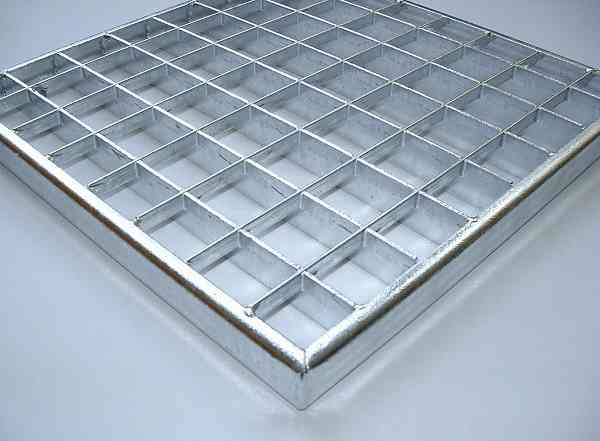
Hot-dip galvanizing is used to coat metal components intended for outdoor applications, such as guardrails, telecommunications towers, high-voltage transmission towers, thick-walled water pipes, utility poles, and grating.
This method is used to protect these components against corrosion and rust, particularly when they are exposed to harsh environmental conditions.
Applications of Cold Galvanizing
Cold galvanizing is used to coat metals intended for hygienic applications, as well as thin-walled pipes and small metal components. It is also widely used in the automotive industry, automotive-parts manufacturing, and the production of bolts, nuts, and other fasteners.