
Grating Price
The price of grating mainly depends on two key factors: the type of material used and the manufacturing costs.
Generally, when the thickness and width of the bearing bars are reduced, the production cost of grating increases. Serrated bars are also more expensive compared to plain bars due to their additional manufacturing process.
In some cases, non-standard bar sizes are used, which results in a higher price compared to commonly available standard sizes in the market. In hot-dip galvanized gratings, thinner bars have a higher zinc consumption ratio compared to their weight, which directly increases the galvanizing cost. Conversely, increasing the bar thickness can reduce the galvanizing cost per unit weight.
In addition, manufacturing expenses and labor costs have a significant impact on the final price of the grating product.
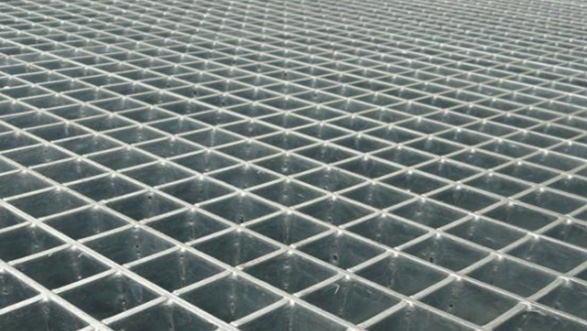
Thin and lightweight bars, wider mesh openings, and generally the production of lightweight gratings result in lower manufacturing efficiency and increased labor costs.
In contrast, heavy-duty gratings usually have higher production efficiency and require less labor cost during the manufacturing process.
However, extremely heavy gratings do not always follow this rule, as operations such as punching, handling, and fixture preparation require additional time, cost, and energy. Therefore, in some cases, very heavy gratings may become more expensive than lightweight gratings.
The welding process is directly related to the number of intersections between bearing bars and cross bars. Therefore, smaller mesh openings result in a higher number of welding points, which increases the final production cost.
In addition to the mentioned factors, another important factor affecting grating cost is the amount of waste generated during manufacturing. This includes waste caused by unsuitable bar lengths, punching residues, and most importantly, waste from cutting and shaping operations. These factors not only increase production time and costs but also reduce the final weight of the manufactured grating.
All of these factors also apply to stainless steel and aluminum gratings.