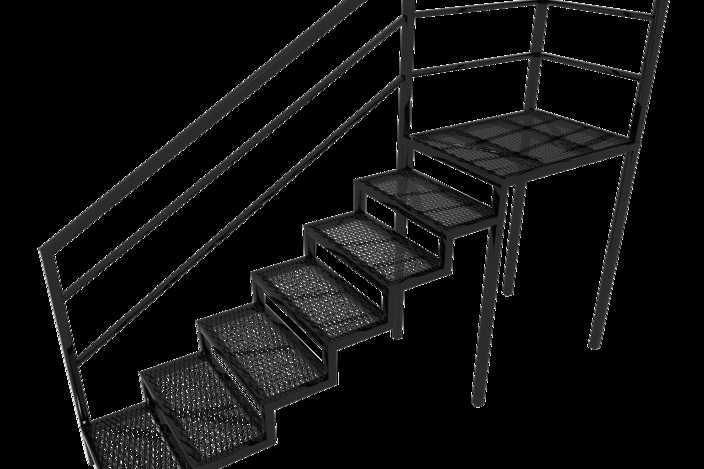
Handrail: Enhancing Safety and Stability of Grating Systems
In the complex world of various industries, ensuring the safety and stability of personnel and equipment is of great importance. Grating is widely used in these industries as an open and permeable surface covering that allows the passage of air, water, and liquids. However, using grating alone is not sufficient. In this article, we will review the types of handrails, their advantages, and their wide range of applications in different industries.
A handrail is one of the key components in grating installation. This safety system acts as a protective boundary around the grating area, ensuring safety and stability in industrial and commercial environments.
Types of Handrails
Standard Handrail:
This type of handrail is installed vertically on the grating and acts as a safety barrier for people walking around the grating surface.
Angled Handrail:
An angled handrail is designed with an inclined structure and is installed on relatively sloped grating surfaces. This type of handrail helps people maintain safety and stability while moving along inclined pathways.
Advantages of Handrails
Fall Prevention
Handrails prevent people from falling from grating surfaces and help reduce the risk of accidents and injuries.
Creating Safety Boundaries
Handrails define clear boundaries around grating areas, helping people move safely along designated paths and maintaining order in industrial environments.
Installation of Accessories
Handrails can also be used as suitable supports for installing accessories such as lighting systems, cameras, control panels, and safety signs.
Load Distribution
Handrails help distribute applied loads more evenly across the grating structure and prevent unwanted deformation or damage.
Applications of Handrails
Handrails are considered an essential component in grating installation across various industries, including:
Oil and Gas Industries
In these industries, safety in high-risk environments is extremely important. Handrails help improve worker safety in hazardous areas.
Chemical Industries
In chemical environments, proper load distribution on grating surfaces and ensuring personnel safety are highly important. Handrails provide additional protection in these applications.
Construction Industries
Handrails are used as safety barriers and protective elements on walkways, platforms, and grating structures in construction projects.
Railway and Metro Stations
In public and high-traffic areas, handrails are used to guide passengers and improve safety.
Marine Industries
In marine environments, handrails are used to enhance safety on platforms, walkways, and various elevated surfaces.
Refineries
In refinery facilities, handrails are used as protective boundaries around equipment and industrial installations.
Conclusion
Handrails play a vital role as a safety and control element on grating systems and various industrial surfaces. They help prevent falls, improve organization and safety in high-traffic areas, provide support for installing accessories, and contribute to better load distribution on grating structures.
Therefore, in every industrial project where grating systems are used, handrails should be considered an essential component to ensure safety and operational efficiency. Handrails are an important and practical element in industrial environments, helping users safely benefit from the functionality of grating systems across various applications.